
ADHD in Women: Why It's So Often Missed
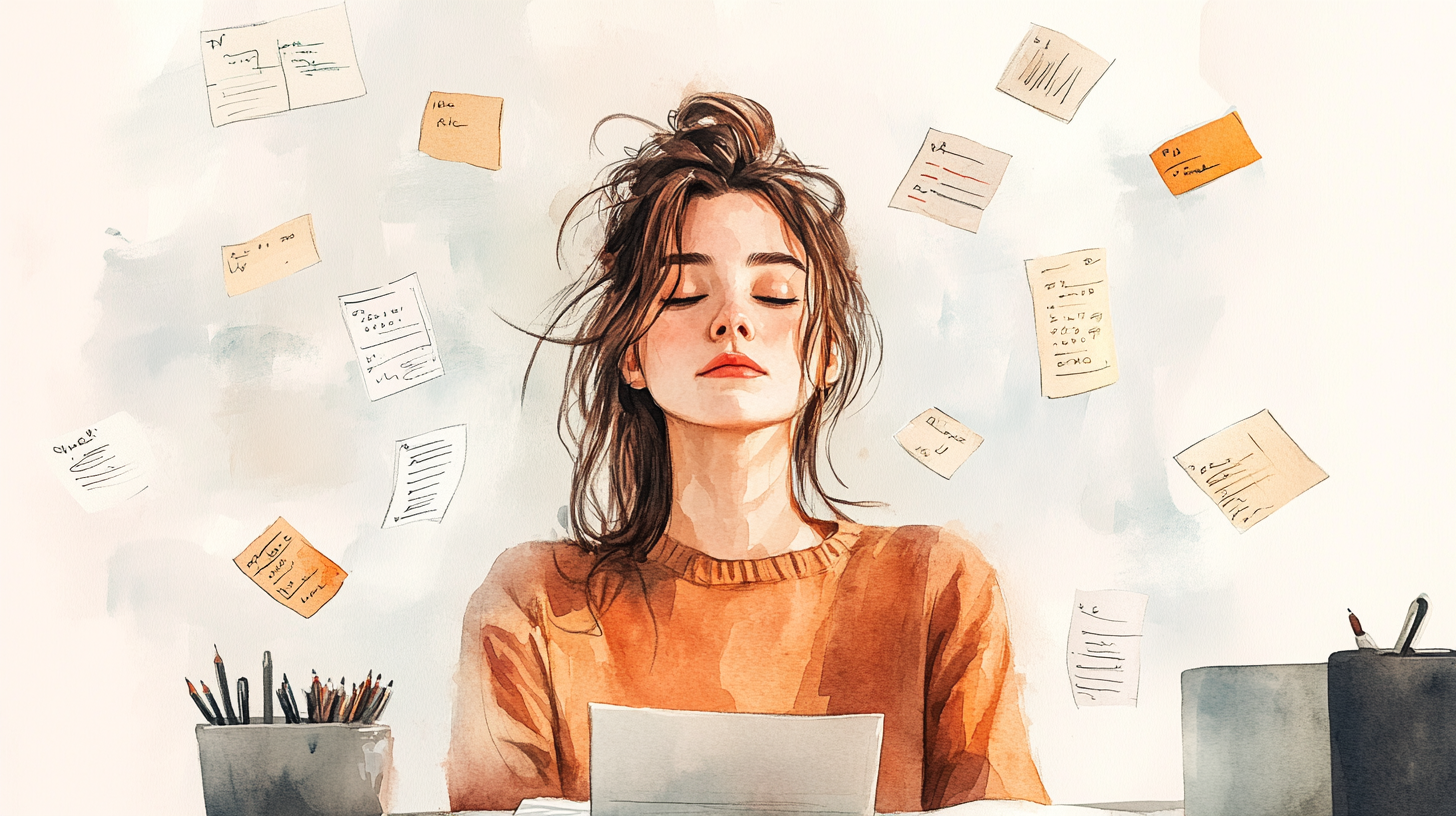
You've always been the one who tries harder.
You were the student who studied twice as long as everyone else and still felt unprepared. You're the employee who shows up early, stays late, and triple-checks every email — not because you're a perfectionist, but because you're terrified of the careless mistake you know is coming. You're the friend who forgets birthdays, loses her keys daily, and cancels plans at the last minute because by 6 p.m. you have absolutely nothing left to give.
You've been called scatterbrained. Disorganized. "Too much." You've been told you just need a better planner, a better routine, more discipline. And you've internalized every word of it.
Here's what no one told you: this might not be a character flaw. It might be ADHD.
As a psychologist who specializes in ADHD evaluations for women, I see this pattern every single week. Smart, capable, hardworking women who have spent years — sometimes decades — compensating for a brain difference that no one ever identified. By the time they reach my office, they're exhausted, frustrated, and often convinced that the problem is simply who they are.
It's not. And understanding why ADHD is so often missed in women is the first step toward changing everything.
The Stereotype That Kept Women in the Dark
When most people think of ADHD, they picture a hyperactive boy bouncing off the walls in a second-grade classroom. He can't sit still. He shouts out answers. He's disruptive, impulsive, impossible to miss.
That image isn't wrong — it just isn't the whole picture. And for decades, it was the only picture that mattered.
The foundational research on ADHD was conducted almost exclusively on boys. The diagnostic criteria were built around their presentation. The screening tools were designed to catch their behaviors. And the result was an entire diagnostic framework that was functionally blind to how ADHD shows up in women and girls.
ADHD has three recognized presentations: hyperactive-impulsive, inattentive, and combined. Boys are more commonly identified with the hyperactive-impulsive type — the bouncing, shouting, can't-sit-still presentation that gets noticed by teachers, parents, and pediatricians.
Girls and women are far more likely to present with the inattentive type. And inattention doesn't disrupt a classroom. It doesn't cause a scene. It quietly implodes behind closed doors.
What ADHD Actually Looks Like in Women
If you're a woman with undiagnosed ADHD, your symptoms probably don't look like the textbook description. They look like your life. Here are some of the patterns I see most commonly in my practice.
The Mental Load Is Crushing
You're managing schedules, groceries, appointments, school forms, work deadlines, and household logistics — and it feels like you're doing it all with a brain that has too many tabs open and not enough RAM. You forget things that seem simple. You lose track of conversations. You walk into rooms with no idea why you're there. The mental load that other people seem to handle on autopilot requires your full, conscious effort.
You Start Everything and Finish Nothing
Your life is full of half-read books, half-organized closets, half-finished projects, and half-formed plans. You begin each one with genuine enthusiasm. But somewhere between the beginning and the middle, the dopamine runs out and your brain moves on to the next thing. Over time, you stop starting things altogether — because why bother when you know you won't follow through?
Time Doesn't Work the Way It Should
You're either early or catastrophically late — there is no middle ground. You underestimate how long things take. You lose track of hours without noticing. You experience "time blindness" — the inability to accurately perceive or plan around the passage of time. You miss deadlines not because you're lazy, but because your brain cannot reliably connect "now" with "later."
Your Emotions Are Intense
Rejection stings more deeply than it should. Criticism sends you spiraling. A small setback can feel like a catastrophe. This is often called Rejection Sensitive Dysphoria (RSD), and it's one of the most common — and least discussed — features of ADHD. You've probably been told you're "too sensitive" your entire life. You're not too sensitive. Your emotional regulation system is working differently than other people's.
You're Exhausted by the End of Every Day
Not the healthy tiredness of a productive day — the bone-deep exhaustion of a brain that has been compensating, masking, and white-knuckling through every task since the alarm went off. You collapse in the evening not because you did too much, but because everything you did required three times the cognitive effort it should have.
Anxiety and ADHD Are Tangled Together
Many women with undiagnosed ADHD develop significant anxiety — not as a separate condition, but as a direct response to years of unpredictability. When you can't trust your own brain to remember, follow through, or stay on task, you develop coping mechanisms: over-preparing, over-checking, over-planning. The anxiety isn't the root problem. It's the scaffolding you built to survive without knowing what was underneath.
Why Women Get Missed
The underdiagnosis of ADHD in women isn't just about bad diagnostic tools. It's about socialization, expectation, and the invisible labor of compensation.
Girls Are Socialized to Mask
From a young age, girls are taught to be compliant, attentive, and well-behaved. A boy who fidgets gets referred for evaluation. A girl who fidgets learns to sit on her hands. A boy who blurts out answers gets flagged. A girl who talks too much gets called chatty. Girls learn — early and thoroughly — to hide the behaviors that would otherwise signal ADHD.
Compensation Hides the Struggle
Many women with ADHD are high-functioning compensators. They develop elaborate systems to manage their symptoms: color-coded calendars, obsessive list-making, phone alarms for everything, staying up until midnight to finish what should have been done by noon. From the outside, the system looks like it's working. From the inside, it's barely holding together. And because the external results look fine, nobody thinks to look deeper.
Co-occurring Conditions Get the Spotlight
When a woman walks into a therapist's office, she typically presents with anxiety, depression, overwhelm, or burnout. These are real experiences — but they're often symptoms of the underlying ADHD, not the root cause. She gets diagnosed with Generalized Anxiety Disorder. She gets prescribed an SSRI. She does talk therapy for years. And while it helps somewhat, it never fully resolves because nobody has identified the engine driving the whole thing.
Hormonal Changes Make Everything Worse
ADHD symptoms in women fluctuate with hormonal cycles in ways that are only now being understood clinically. Many women report that their symptoms intensify premenstrually, during pregnancy, postpartum, and during perimenopause. These fluctuations can make ADHD look inconsistent — which leads clinicians to dismiss it.
The Cost of Not Knowing
Living with undiagnosed ADHD as a woman isn't just inconvenient. It's costly — emotionally, professionally, and relationally.
Years of working harder than everyone else without understanding why takes a measurable toll. Research shows that women with late-diagnosed ADHD have higher rates of anxiety, depression, eating disorders, substance use, and suicidal ideation compared to neurotypical women. They report lower self-esteem, more relationship conflict, and a persistent sense of underachievement — even when their actual accomplishments are significant.
The internal narrative is almost always the same: "I should be able to do this. Everyone else can do this. What is wrong with me?"
Nothing is wrong with you. Your brain works differently. And once you understand how, everything changes.
What Happens When Women Finally Get Diagnosed
I've seen it hundreds of times. A woman sits across from me, hears the results of her evaluation, and goes quiet for a moment. Then she says something like:
"So I'm not lazy."
"So there's a reason."
"So it wasn't my fault this whole time."
A late ADHD diagnosis doesn't erase the past. It doesn't undo the years of self-blame, the lost opportunities, or the relationships that were strained by patterns she couldn't name. But it reframes everything. It takes a lifetime of "what's wrong with me?" and turns it into "oh — that's how my brain works."
From there, treatment can actually work. Therapy becomes targeted instead of generic. Medication becomes a real option, informed by the correct diagnosis. Strategies stop being about "trying harder" and start being about working with the brain you actually have.
If you've been diagnosed with something that never fully explained your experience — if you've been told it's anxiety or depression or burnout but the treatment never quite sticks — ADHD might be the missing piece. This is especially true if you also relate to the experience of late-diagnosed autism, since ADHD and autism frequently co-occur in women.
What an ADHD Evaluation Looks Like for Women
If you're considering an evaluation, here's what you can expect in my practice.
Clinical Interview
We start with a detailed conversation about your history — not just your current symptoms, but your childhood, your school experience, your relationships, your work patterns, and the internal experience you've been carrying. This is the foundation of everything. For women, the clinical interview often reveals patterns that standardized screeners miss entirely.
Standardized Assessment
I use a tailored battery of evidence-based assessment tools selected specifically for your presentation. This typically includes measures of attention, executive functioning, processing speed, working memory, and emotional regulation — along with screenings for commonly co-occurring conditions like anxiety, depression, and autism. I don't use a one-size-fits-all battery. The tools I select are based on the clinical questions we're trying to answer.
Contextualized Interpretation
This is where a skilled evaluator makes all the difference. A woman can score in the "normal" range on a standard attention test and still have clinically significant ADHD — because she's spent her entire life developing compensatory strategies that mask her deficits on structured tasks. I interpret test results within the context of your full history, your reported experience, and the clinical picture as a whole.
Comprehensive Report and Feedback
After testing, you'll receive a detailed written report with clear diagnostic conclusions, a profile of your cognitive and executive functioning strengths and challenges, and specific, practical recommendations for treatment, accommodations, and daily life. Then we sit down for a feedback session where I walk through everything with you, answer your questions, and help you build a plan for what comes next.
The entire process is designed to give you clarity — not just a label, but a genuine understanding of how your brain works and what to do about it.
You're Not Too Late
If you're reading this in your thirties, your forties, your fifties, or beyond — you're not too late. There is no age limit on understanding yourself. The women who walk through my door at 45 benefit just as profoundly from diagnosis as the ones who come at 25. Often more, because they have decades of experience to suddenly make sense of.
You've been working harder than you should have to. You've been compensating for something no one ever named. And you've been blaming yourself for struggles that were never about effort, discipline, or willpower.
It's time to stop guessing and start understanding.
A 15-minute consultation is all it takes to talk through what you're experiencing and figure out whether an evaluation is the right next step. You don't need a referral. You don't need to have it all figured out. You just need to start the conversation.
Your brain isn't broken. It just works differently. And understanding how is the most powerful thing you can do for yourself.
Dr. Lindsay Campbell is a licensed clinical psychologist (PSY35915) and board-certified behavior analyst (1-19-35746) specializing in comprehensive ADHD and autism evaluations for children, teens, and adults in Orange County, California. She offers in-person evaluations in Orange County and telehealth services statewide. To schedule a free 15-minute consultation, call (562) 794-3412.
