
What Is Masking — and What Does It Cost?
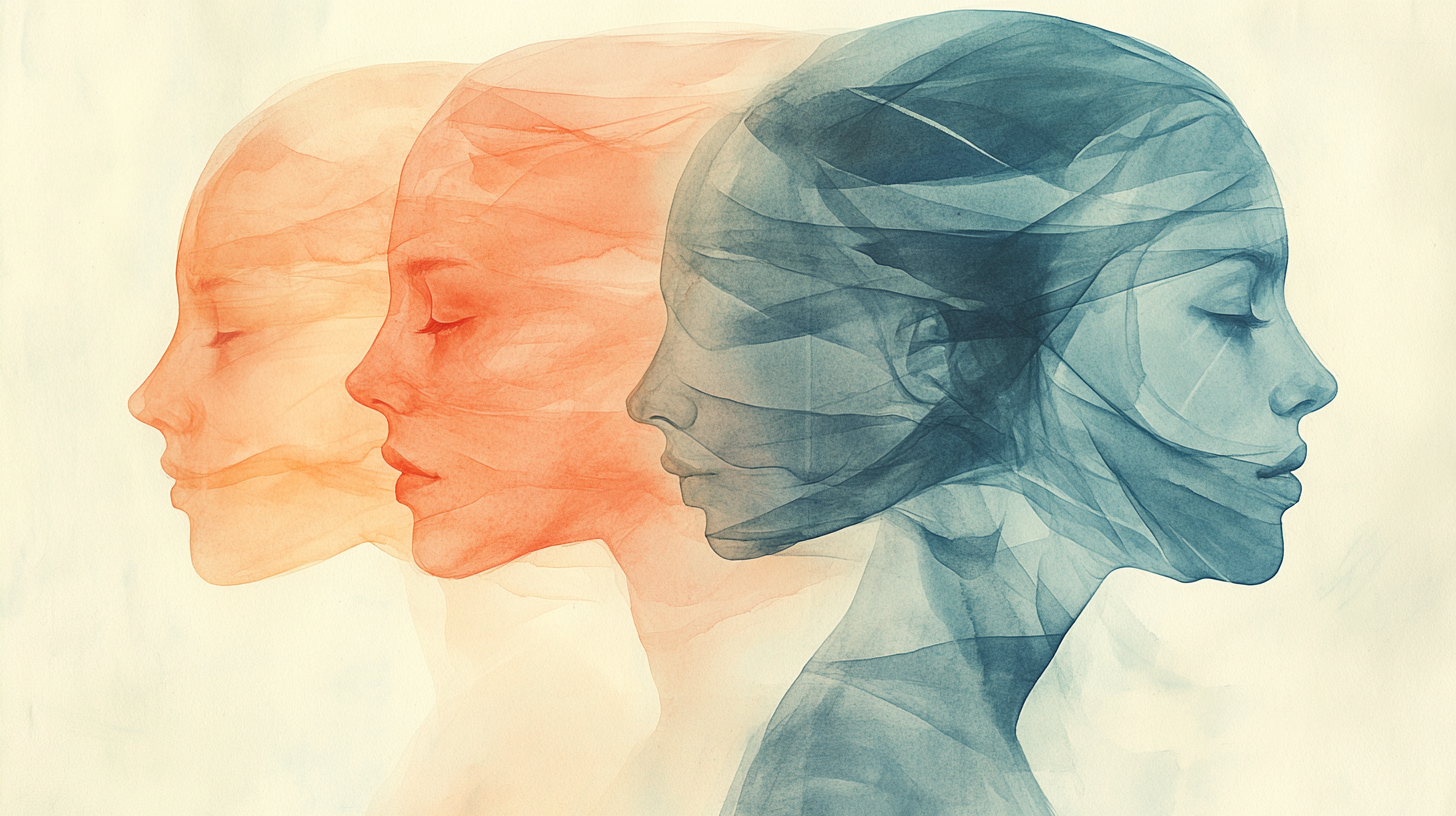
If you're autistic — or think you might be — you may have come across the word "masking." It's a term that shows up constantly in online neurodivergent communities, and for many people, it's the concept that finally put language to something they'd been doing their entire lives without realizing it.
Masking (sometimes called camouflaging or compensating) refers to the conscious or unconscious suppression of autistic traits in order to fit in, meet social expectations, or avoid negative consequences. It's the performance of neurotypicality — an ongoing, exhausting act that can be so effective that even clinicians miss the autism underneath.
Understanding masking isn't just useful for autistic people. It's essential for anyone who wants to understand why so many autistic individuals — especially women, people of color, and anyone socialized to prioritize social harmony — are diagnosed late, misdiagnosed, or never diagnosed at all.
What Masking Actually Looks Like
Masking isn't one behavior. It's a collection of strategies, some deliberate and some automatic, that allow an autistic person to navigate a neurotypical world with less friction.
Scripting is one of the most common forms. This means preparing phrases, responses, or entire conversational templates in advance. A person might rehearse what to say when they run into a coworker, plan small talk topics before a party, or memorize appropriate reactions to common social situations. This isn't the same as being socially skilled — it's performing social skill through memorization and effort.
Mimicking involves observing how other people behave and copying their tone, facial expressions, body language, or social style. Many autistic people describe choosing a "model" — a friend, a character from a show, a coworker — and studying that person closely to learn how to "do" social interaction. Some do this so naturally and so early in life that they don't realize they're doing it.
Suppressing natural behaviors is another core component. This might mean forcing eye contact even though it feels physically uncomfortable, resisting the urge to stim (self-stimulatory behaviors like rocking, fidgeting, or hand-flapping), hiding sensory distress in environments that are too loud, bright, or crowded, or pushing through social exhaustion rather than excusing yourself.
Monitoring and adjusting in real time is perhaps the most cognitively taxing aspect. A masking person is constantly scanning the social environment: Am I making enough eye contact? Did I react the right way? Are they bored? Should I laugh now? This level of hypervigilance is sustainable in short bursts, but it becomes crushing over hours, days, and years.
Why People Mask
Masking isn't a choice in the way most people understand the word. For many autistic individuals, it's a survival strategy that develops early in response to social pressure, rejection, or punishment for being "different."
Children who are teased for their interests, told to "stop being weird," corrected for their tone of voice, or punished for meltdowns learn quickly that being themselves has consequences. Masking becomes the alternative: if you can't be yourself safely, you become someone else. Or at least, you learn to perform someone else convincingly enough to get through the day.
Socialization plays a massive role. Girls, in particular, are taught from an early age to be attuned to others, to smooth over social friction, and to prioritize relationships. Autistic girls often channel their pattern-recognition strengths into learning the rules of social interaction — not intuitively, the way neurotypical children do, but analytically, like learning a foreign language.
Adults who mask often describe doing it at work, in romantic relationships, with extended family, and in medical settings. The motivation isn't vanity. It's self-protection. Unmasking — showing up as fully autistic — can lead to being perceived as rude, cold, disengaged, or incompetent. In many contexts, masking is what allows autistic people to keep their jobs, maintain relationships, and access care.
The Cost of Masking
Here's the part that matters most: masking works, until it doesn't. And the cost of sustained masking is significant.
Autistic burnout is one of the most common consequences. This isn't ordinary fatigue. It's a state of physical, emotional, and cognitive depletion that results from years of sustained effort to appear neurotypical. People experiencing autistic burnout often describe losing skills they previously had, increased sensory sensitivity, profound exhaustion that doesn't resolve with rest, withdrawal from social life, and difficulty functioning in ways that used to feel manageable.
Mental health consequences are pervasive. Research consistently links masking to higher rates of anxiety, depression, suicidal ideation, and identity confusion. When you spend most of your waking life performing a version of yourself that isn't real, it becomes hard to know who you actually are.
Delayed or missed diagnosis is another consequence. The more effectively someone masks, the less likely they are to be recognized as autistic — by clinicians, by family, and even by themselves. Many late-diagnosed adults describe decades of wondering what was wrong with them, cycling through diagnoses that never quite fit, and being told by well-meaning providers that they "can't be autistic" because they make eye contact or hold a job.
Loss of self is perhaps the most insidious cost. When masking starts early enough and lasts long enough, the person underneath can feel unreachable. Many autistic adults describe not knowing what they actually like, what their real personality is, or what they would choose if social expectations were removed from the equation. Unmasking, for them, isn't just about dropping a social performance. It's about rediscovering who they are.
Masking and the Diagnostic Process
One of the most important implications of masking is how it affects evaluation. If a clinician doesn't understand masking, they may rely too heavily on surface-level observations: "She made great eye contact," "He was friendly and engaged," "They didn't show any obvious repetitive behaviors." These observations are real, but they can be misleading when the person sitting across from you has spent a lifetime learning to perform exactly that way.
A thorough autism evaluation for someone who masks needs to go deeper. It should include a detailed developmental history that asks not just about behaviors, but about the effort behind them. It should explore the person's internal experience — do they feel natural in social interactions, or are they actively managing a performance? It should consider the context of their social functioning — are relationships maintained through genuine connection or through learned scripts?
This is why the evaluator matters as much as the evaluation. A clinician who understands masking won't be fooled by a polished presentation. They'll ask the right questions, listen between the lines, and recognize that the most important data isn't always visible.
Moving Toward Unmasking
Unmasking is a process, not a switch. It doesn't mean abandoning all social adaptations overnight. It means gradually learning which parts of your social behavior are authentic and which are performed, giving yourself permission to rest and stim and step back when you need to, finding relationships and environments where you don't have to perform to be accepted, and building a relationship with yourself that isn't filtered through other people's expectations.
Therapy can support this process, especially when the therapist understands masking and isn't inadvertently reinforcing it. A neurodiversity-affirming therapist won't try to make you "better at masking." They'll help you figure out who you are without it — and how to build a life that accommodates your actual brain, not the one you've been pretending to have.
If any of this resonates, whether you're newly diagnosed, exploring the possibility of autism, or just tired of performing — you're welcome to reach out. I offer free 15-minute consultations and I'd be happy to talk through what an evaluation or therapy might look like for you. Call (562) 794-3412 or schedule through my website.
Dr. Lindsay Campbell is a licensed clinical psychologist (PSY35915) and board-certified behavior analyst (1-19-35746) specializing in comprehensive neuropsychological evaluations for children, teens, and adults in Orange County, California. She offers in-person evaluations in Orange County and telehealth services statewide. To schedule a free 15-minute consultation, call (562) 794-3412.